
Fuel tankers must get off roads once oil pipeline is complete – Museveni
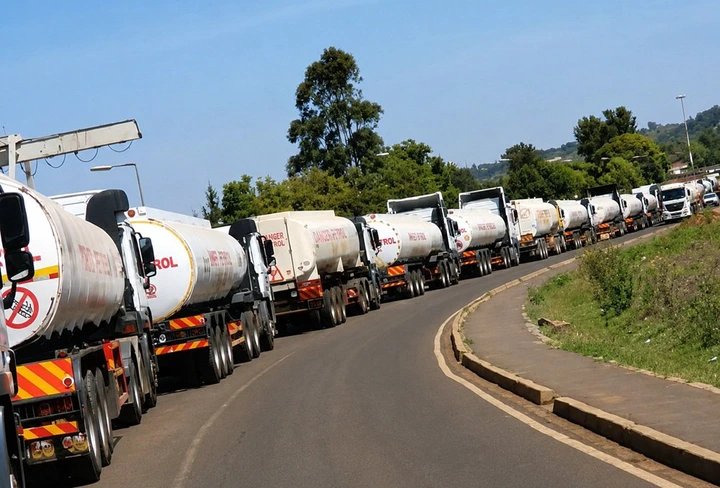

Kampala, Uganda: President Yoweri Museveni has renewed a push to move petroleum transportation off Uganda’s roads and into pipelines, a strategy that could dramatically reduce the number of fuel tankers on the country’s highways.
While delivering his State of the Nation Address at Kololo on Thursday, Mr Museveni outlined some of the government’s infrastructure priorities, saying Uganda is working with Kenya and Tanzania on pipelines for both crude oil and refined petroleum products, arguing that heavy cargo should increasingly be moved by rail while petroleum products should be transported through pipelines.
“In the near future, fuel tankers will no longer be needed on the roads once the East African Crude Oil Pipeline project is completed. Petrol will be transported through pipelines instead of competing with vehicles on the roads. This will leave roads for cars and light cargo,†Mr Museveni said.
The President’s proposal forms part of a broader transport modernization strategy that includes the rehabilitation of the metre-gauge railway and the planned construction of the Standard Gauge Railway (SGR), both aimed at reducing pressure on Uganda’s road network.
If fully implemented, Museveni’s vision would represent one of the biggest changes in Uganda’s fuel distribution system since independence.
Currently, the vast majority of Uganda’s fuel enters the country through Kenya’s Port of Mombasa and is transported inland by road tankers. Every day, hundreds of fuel trucks travel along the Northern Corridor through Kenya into Uganda before distributing petroleum products to filling stations, industries and storage depots across the country.
The system has long been criticized for accelerating road deterioration, increasing congestion and contributing to serious road crashes involving hazardous cargo.
According to successive Uganda Police Annual Crime Reports, heavy commercial vehicles remain involved in a significant number of fatal road crashes annually, while fuel tanker accidents often pose additional risks of fires, explosions and environmental contamination.
Government officials have also repeatedly pointed to the enormous maintenance costs associated with heavy axle loads on national roads.
How Pipelines Work Elsewhere
Museveni’s proposal mirrors systems already used in several developed and emerging economies.
In the United States, thousands of kilometres of pipelines transport crude oil, petrol, diesel and aviation fuel between production centres, refineries and storage terminals.
Europe relies heavily on underground pipeline networks connecting refineries to major cities and airports.
Countries such as Saudi Arabia, the United Arab Emirates and China similarly use pipelines as the backbone of petroleum transportation due to their lower operational costs and improved safety record compared to road transport.
Neighbouring Kenya already operates petroleum pipelines through the state-owned Kenya Pipeline Company, which transports refined fuel from Mombasa to Nairobi and other inland depots, significantly reducing the need for road tankers.
Experts note that pipelines can move far larger fuel volumes continuously, operate around the clock and are generally cheaper per litre transported than road haulage.
For Uganda to substantially eliminate fuel tankers from highways, analysts say several major investments would be required.
First would be completion of the East African Crude Oil Pipeline (EACOP), which is already under development to transport Uganda’s crude oil from Hoima to Tanzania’s Tanga Port.
However, Museveni’s latest remarks go beyond crude oil and point to future pipelines dedicated to refined petroleum products.
Such a system would require large petroleum storage terminals across the country, dedicated refined products pipelines from coastal import points or domestic refineries, distribution depots linked to regional fuel markets, modern monitoring and leak-detection systems, and regulatory reforms governing pipeline operations and fuel distribution.
Uganda’s planned refinery project in Hoima would also become central to the strategy. If refined products are produced domestically, pipeline networks could distribute petrol, diesel, jet fuel and kerosene directly from the refinery to major urban centres and industrial zones.
Potential Economic Benefits
Supporters of the pipeline model argue that the long-term economic gains could be substantial.
Reduced fuel transportation costs could lower petroleum prices over time. Government would spend less on repairing roads damaged by heavy trucks, while businesses would benefit from faster and more predictable fuel deliveries.
The strategy could also improve road safety by reducing the number of hazardous cargo vehicles travelling through densely populated areas.
In addition, shifting fuel transportation to pipelines would support Museveni’s broader objective of reserving highways primarily for passenger traffic and lighter commercial cargo.
Despite the potential benefits, the transition would not be immediate. Pipeline construction requires billions of dollars in investment, lengthy environmental approvals, land acquisition processes and regional cooperation agreements.
Fuel distributors would also need to adapt their supply chains, while government would have to determine how existing tanker transport businesses fit into the new model.
Analysts note that even countries with extensive pipeline infrastructure continue using some road tankers for last-mile distribution to filling stations and remote areas.
As a result, Uganda is unlikely to completely eliminate fuel trucks in the near future. Instead, the more realistic scenario would be a significant reduction in long-distance fuel transportation by road, with pipelines handling bulk movement and trucks focusing on local delivery.
The proposal aligns with Museveni’s long-standing emphasis on integrated transport infrastructure as a driver of economic transformation.
In the same address, the President highlighted ongoing investments in roads, railways, energy and regional connectivity, arguing that Uganda has now identified the critical infrastructure needed to support a prosperous economy.
If implemented successfully, the shift from fuel tankers to pipelines could become one of the most consequential transport reforms of Museveni’s new term, fundamentally changing how petroleum products move across Uganda while reshaping the country’s road network, logistics sector and energy economy.


 Government will not gazette Kijanangoma as King of Tooro for now - Attorney General insists
Ultimate Uganda
Government will not gazette Kijanangoma as King of Tooro for now - Attorney General insists
Ultimate Uganda
 King Oyo’s Body to Arrive Thursday
Ultimate Uganda
King Oyo’s Body to Arrive Thursday
Ultimate Uganda
 Besigye, Lukwago expected to meet Gen. Salim Saleh today at Kapeeke
Ultimate Uganda
Besigye, Lukwago expected to meet Gen. Salim Saleh today at Kapeeke
Ultimate Uganda
 Rwabwogo Advised to ‘Eat His Bishop’ As MK Prepares to Enter State H’se: PREZ MUSEVENI ON HIS WAY OUT
Ultimate Uganda
Rwabwogo Advised to ‘Eat His Bishop’ As MK Prepares to Enter State H’se: PREZ MUSEVENI ON HIS WAY OUT
Ultimate Uganda
0 Comments