
Developers to Help Tackle Uganda’s 2.4 Million Housing Deficit
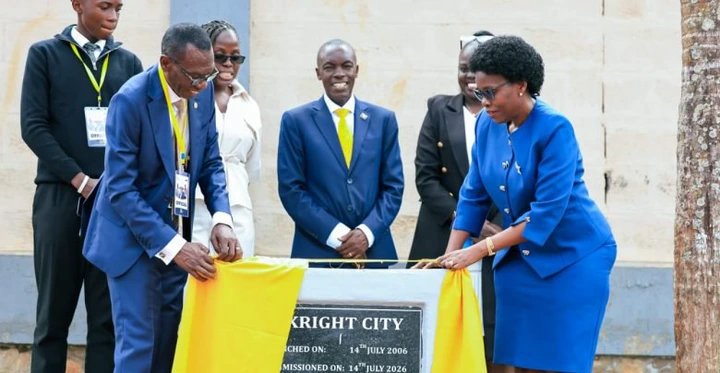

Lands Minister Judith Nabakooba (in blue) officiates at the event.
Uganda’s government has called on private real estate developers to take a leading role in addressing the country’s estimated 2.4 million-unit housing deficit, as rising incomes and rapid urbanisation increase demand for quality homes.
Speaking on behalf of President Yoweri Museveni during the 20th anniversary celebrations of Akright City, Lands, Housing and Urban Development Minister Judith Nabakooba said planned urban developments provide a blueprint for transforming Uganda’s housing sector while supporting economic growth and job creation.
Nabakooba described Akright City as an example of how long-term private investment can contribute to national development through planned housing projects that improve living standards.
“Akright City is an example of 20 years of consistent performance and planned housing that has transformed the way urban development can be undertaken in Uganda,†she said.
She said Uganda’s improving economic fundamentals, including rising incomes and sustained economic growth, are creating opportunities for developers to invest in modern residential neighbourhoods as the country’s middle class expands.
Nabakooba said the housing sector remains a strategic part of the economy because of its links to manufacturing, construction, employment creation and poverty reduction.
She noted that Uganda’s industrialisation drive has increased local production of construction materials such as steel, ceramics and tiles, reducing reliance on imports while strengthening domestic value chains.
The minister said the economy is projected to grow by 6.4 percent before accelerating further as Uganda moves closer to commercial oil production, creating further demand for quality housing.
She urged private developers to invest in planned urban settlements that can reshape the skylines of Uganda’s growing towns and cities.
Addressing housing affordability, Nabakooba encouraged low-income earners to organise themselves into housing cooperatives and Savings and Credit Cooperative Organisations (SACCOs), saying such arrangements could attract government support.
“If low-income earners can organise themselves into SACCOs and Housing Cooperatives, it is another area where the government can invest to grow our economy and address the housing deficit,†she said.
Nabakooba also called for measures to preserve property value across generations, warning that continued subdivision of land through inheritance could undermine planned developments.
She encouraged Ugandans to embrace family companies as a model for managing property assets and ensuring long-term sustainability.
The minister further challenged developers and policymakers to ensure future cities are designed to withstand climate-related challenges, including floods, droughts and heatwaves.
She said sustainable urban planning should focus on resilient infrastructure, environmental protection and inclusive growth while supporting the objectives of the African Union’s Agenda 2063.
“The future of Uganda is housing as a fundamental right, and also an investment,†Nabakooba said, urging stakeholders to make the sector more inclusive, sustainable and prosperous.
She commended Akright City for moving beyond land speculation to deliver fully planned urban communities, saying stronger collaboration between government, investors and communities would help unlock the potential of Uganda’s housing sector.


 Government will not gazette Kijanangoma as King of Tooro for now - Attorney General insists
Ultimate Uganda
Government will not gazette Kijanangoma as King of Tooro for now - Attorney General insists
Ultimate Uganda
 King Oyo’s Body to Arrive Thursday
Ultimate Uganda
King Oyo’s Body to Arrive Thursday
Ultimate Uganda
 Besigye, Lukwago expected to meet Gen. Salim Saleh today at Kapeeke
Ultimate Uganda
Besigye, Lukwago expected to meet Gen. Salim Saleh today at Kapeeke
Ultimate Uganda
 Rwabwogo Advised to ‘Eat His Bishop’ As MK Prepares to Enter State H’se: PREZ MUSEVENI ON HIS WAY OUT
Ultimate Uganda
Rwabwogo Advised to ‘Eat His Bishop’ As MK Prepares to Enter State H’se: PREZ MUSEVENI ON HIS WAY OUT
Ultimate Uganda
0 Comments