
From State House Power to Political Shadows: Uganda’s Most Dramatic Falls from Grace Under the NRM Era
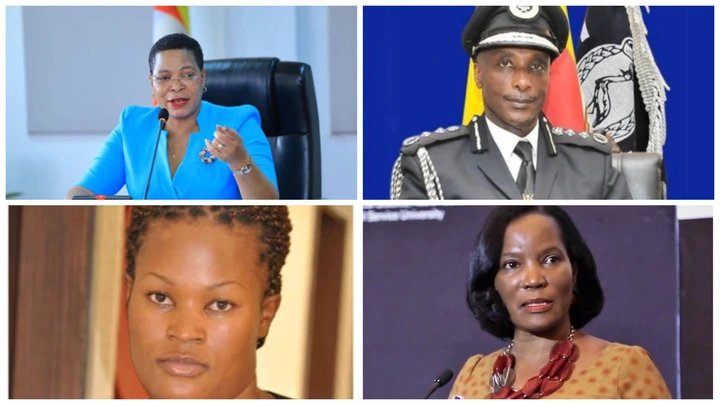

Several senior NRM figures built significant influence through government appointments, party positions, and proximity to President Museveni.
Their political fortunes declined due to scandals, internal disagreements, public controversies, or shifts in government strategy.
Their stories illustrate the unpredictable nature of political power and the changing dynamics within Uganda’s ruling establishment.
They say time is the greatest judge. In politics, where alliances shift and power constantly changes hands, few positions are permanent. Leaders who once appeared untouchable can find themselves fighting to remain relevant years later.
Since the National Resistance Movement (NRM) came to power in 1986, Uganda has witnessed the rise of several political figures who became symbols of influence, authority, and access to the centre of power. Some rose from ordinary backgrounds to occupy some of the highest offices in the country. Others became trusted presidential allies, party strategists, security chiefs, or government administrators.
At the height of their careers, they commanded enormous respect and influence. Their words carried weight, their decisions shaped institutions, and many appeared protected by their closeness to President Yoweri Museveni.
However, politics is also defined by change. Some lost their positions after corruption allegations, political disagreements, public controversies, or changes in the political environment. Others simply faded from the inner circles of power as new actors emerged.
Below are some of the most notable political journeys of leaders who experienced dramatic rises and equally significant declines in influence.
1. Anita Among – From Parliamentary Powerhouse to Political Controversy
Anita Among rose rapidly through Uganda’s political ranks, becoming one of the most influential figures in the country’s legislature.
The Rise
After joining Parliament as a representative of Bukedea, Among quickly gained prominence within the NRM establishment. Her political influence grew significantly when she became Deputy Speaker and later Speaker of the 11th Parliament.
As Speaker, she controlled parliamentary proceedings and became one of the most powerful figures in Uganda’s political system. She enjoyed a close relationship with the executive and often projected confidence about her political backing.
The Fall
Her political fortunes changed following international sanctions, corruption allegations, and increased scrutiny over parliamentary expenditure. The United Kingdom imposed sanctions against her over corruption-related allegations, which she denied.
The controversy triggered significant pressure around her leadership of Parliament. She later did not retain the Speakership after the 2026 elections, marking a major shift from the height of her influence.
2. Gen. Kale Kayihura – The Security Chief Who Lost the Shield of Power
Kale Kayihura was once among the most powerful security officials in Uganda.
The Rise
Appointed Inspector General of Police in 2005, Kayihura transformed the Uganda Police Force and became a central figure in maintaining security during a politically competitive period.
For more than a decade, he was considered one of President Museveni’s closest security allies. His influence extended beyond traditional policing, with critics accusing him of allowing the police to become heavily involved in political activities.
The Fall
In 2018, Kayihura was removed from his position and later arrested by the military.
He faced charges before the General Court Martial, including allegations related to unlawful conduct while serving as police chief. He denied wrongdoing.
His removal marked one of the clearest examples of how quickly political protection can disappear within Uganda’s security establishment.
3. Amama Mbabazi – The Former Prime Minister Who Became a Rival
Amama Mbabazi was once considered one of President Museveni’s closest allies.
The Rise
A lawyer and longtime NRM strategist, Mbabazi became one of the architects of the ruling party’s political machinery.
He served as Security Minister, NRM Secretary General, and later Prime Minister. His influence earned him the nickname “Super Minister†because of the number of powerful portfolios he controlled.
For years, he was viewed as one of the most likely successors to President Museveni.
The Fall
His political fortunes changed when speculation grew that he wanted to challenge Museveni for the presidency.
In 2014, he was removed as Prime Minister and gradually lost influence within the NRM.
He later contested against Museveni in the 2016 presidential election as an independent candidate but performed poorly.
His story remains one of the most dramatic examples of how succession politics can reshape alliances.
4. Aidah Nantaba – The Anti-Land Grabbing Crusader Who Lost Political Momentum
Aidah Nantaba became famous for her outspoken fight against land grabbing.
The Rise
Nantaba gained popularity among ordinary citizens by defending vulnerable landowners and challenging powerful individuals accused of land injustices.
Her activism attracted President Museveni’s attention, and she was appointed State Minister for Lands.
She became known for her direct approach, often openly confronting officials she accused of wrongdoing.
The Fall
Her aggressive style created many political enemies.
Following the 2019 shooting incident involving Ronald Ssebulime, where an innocent civilian was killed after being mistaken for a suspect, Nantaba faced heavy criticism.
She later lost her cabinet position and complained publicly about powerful individuals working against her political career.
5. Jennifer Musisi – The Reformist Who Clashed With Kampala Politics
Jennifer Musisi became one of Uganda’s most influential technocrats.
The Rise
In 2011, President Museveni appointed Musisi as the first Executive Director of the newly created Kampala Capital City Authority (KCCA).
She was given a strong mandate to reform Kampala, improve revenue collection, enforce regulations, and modernise the city.
Her tough leadership style earned praise from some for bringing order to the capital.
The Fall
However, her aggressive enforcement policies, including the removal of street vendors and demolition of illegal structures, generated public resentment.
After the NRM performed poorly in Kampala during the 2016 elections, criticism increased over KCCA’s approach.
Musisi resigned in 2018, citing challenges in implementing reforms.
6. Abdul Kitatta – The Powerful Mobiliser Who Lost Political Protection
Abdul Kitatta was a prominent figure within Kampala’s political mobilisation networks.
The Rise
As leader of Boda Boda 2010, Kitatta became influential among motorcycle taxi operators and was viewed as a strong supporter of the NRM.
His organisation enjoyed significant visibility and political relevance.
The Fall
His fortunes changed after the fall of his key ally, Gen. Kale Kayihura.
In 2018, Kitatta was arrested and later convicted by the General Court Martial for offences related to illegal possession of firearms and military stores.
His imprisonment marked a dramatic decline from his previous influence.
7. Gilbert Bukenya – From Vice President to Political Isolation
Gilbert Bukenya was once one of the most popular figures in Uganda’s leadership.
The Rise
A physician and academic, Bukenya rose through the NRM ranks and became Vice President in 2003.
He was particularly influential in Buganda politics and helped strengthen the NRM’s support base in the region.
The Fall
His relationship with the government became strained after he spoke publicly about corruption and alleged powerful individuals influencing government decisions.
He was dropped as Vice President in 2011 and later faced charges linked to the Commonwealth Heads of Government Meeting (CHOGM) procurement controversy.
Although he later returned to political relevance, his period of decline remains one of the most remembered political reversals.
8. Mary Goretti Kitutu – The Minister Brought Down by the Iron Sheets Scandal
Mary Goretti Kitutu was a senior cabinet minister whose career was affected by one of Uganda’s biggest recent corruption scandals.
The Rise
Kitutu served as Minister for Karamoja Affairs, a position that placed her at the centre of government efforts to support one of Uganda’s most vulnerable regions.
Her ministry handled programmes aimed at improving livelihoods in Karamoja.
The Fall
Her name became associated with the controversial diversion of iron sheets meant for vulnerable communities in Karamoja.
She was arrested and charged in the Anti-Corruption Court.
The scandal significantly damaged her reputation and political standing.
9. Maj. Kakooza Mutale – The Veteran Mobiliser Who Faded From Influence
Kakooza Mutale was once a feared political mobiliser within the NRM system.
The Rise
Mutale became prominent through the Kalangala Action Plan, a political mobilisation structure associated with the NRM’s electoral campaigns.
He was considered an important figure in securing political support for President Museveni during earlier election cycles.
The Fall
As Uganda’s political environment changed and the government increasingly relied on formal institutions, Mutale’s influence reduced.
He gradually disappeared from the centre of political activity.
Agnes Nandutu represents another example of a politician whose rise was followed by controversy.
The Rise
A former journalist, Nandutu transitioned into politics and became a Member of Parliament before joining cabinet as State Minister for Karamoja Affairs.
Her communication skills and media background helped her build public recognition.
The Fall
Her political career suffered after she was implicated in the iron sheets scandal involving materials meant for Karamoja communities.
She was arrested and charged over allegations related to the matter, which she denied.
The controversy affected her standing within government.
Conclusion: In Politics, Power Is Always Temporary
The journeys of these leaders show one constant reality of politics: influence depends on relationships, public perception, institutional support, and timing.
Many of these figures were once considered among the most powerful people in Uganda. They had access, authority, and political protection.
But politics is a moving landscape. New alliances emerge, old ones weaken, and leaders who appear untouchable can quickly find themselves outside the centre of power.
Their stories remain a reminder that in politics, today’s giant can become tomorrow’s forgotten name.


 The women who have been in King Oyo’s life
Ultimate Uganda
The women who have been in King Oyo’s life
Ultimate Uganda
 Ex Kagame Guard Commander Tom Byabagamba Dies in Rwandan Prison After 12 Years
Ultimate Uganda
Ex Kagame Guard Commander Tom Byabagamba Dies in Rwandan Prison After 12 Years
Ultimate Uganda
 Government begins salary payments for public sector workers – Reform Committee
Ultimate Uganda
Government begins salary payments for public sector workers – Reform Committee
Ultimate Uganda
 Temangalo land: NSSF, Nzenyi reach agreement
Ultimate Uganda
Temangalo land: NSSF, Nzenyi reach agreement
Ultimate Uganda
0 Comments