
Budaka moves to tackle school hunger with new feeding programme
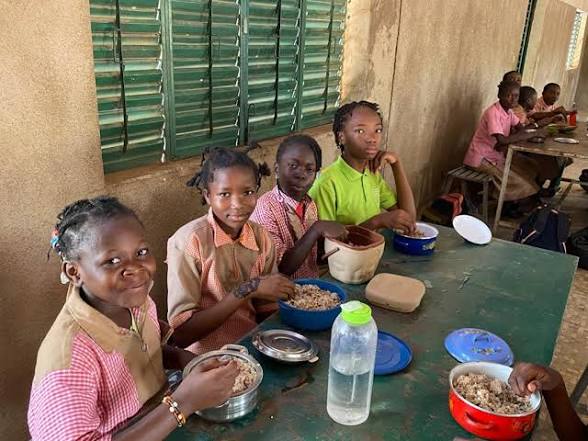

Children in Uganda’s eastern district of Budaka arrive at school each day in neat uniforms, exercise books in hand, ready for lessons. But for many, the school day has long been marked by something less visible: hunger.
Teachers say signs are familiar, drooping heads by mid-morning, declining participation in class, and unexplained absences. In some cases, hunger has quietly contributed to dropout rates.
Now, local authorities in Budaka are preparing a school feeding programme aimed at addressing the challenge in government-aided primary schools.
Budaka, an agrarian district where most households depend on subsistence farming, is frequently affected by food insecurity during dry spells and poor harvests, leaving school-going children among the most vulnerable.
“For some learners, the absence of food at school has quietly pushed them out of the education system. It is from this background that we are driving this campaign to implement school feeding in all government-aided primary schools,†said Kanifa Mugala, the senior education officer.
According to Mugala, the idea had evolved from years of observation and lessons from other districts where similar programmes have improved attendance and performance.
Education officials and local leaders say hunger remains a key driver of poor academic performance in the district.
Jamada Muwandiki, the LC3 chairperson of Lyama sub-county, said children struggling with hunger are less able to concentrate in class.
“A child who is worried about their next meal is far less likely to focus on reading, writing or arithmetic,†he said.
The programme, expected to begin in the second term, will provide at least one meal per school day to pupils. Schools will be encouraged to establish gardens to grow part of their own food under a “home-grown†model intended to reduce costs and enhance practical agricultural learning.
Authorities say the initiative will rely heavily on community participation, with parents expected to contribute food items or small financial inputs, while schools manage preparation and distribution.
Budaka district education officer Richard Wako said sensitisation campaigns are ongoing to encourage parental involvement.
“When children know they will receive a meal at school, families are more likely to keep them enrolled,†he said.
Wako said poor parental support for school feeding has contributed to irregular attendance, low performance and dropout cases.
He added that the programme aims to improve attendance, reduce dropout rates and strengthen learning outcomes.
Parents, however, have been urged to view the initiative as a shared responsibility between households, schools and local government.
At Nakisenye Primary School, headteacher Bernard Jossy Muluga said previous efforts to engage parents had yielded limited results.
“We have been engaging parents to contribute towards feeding, but the response has been low,†he said on Monday.
The school, which has 1,814 pupils, had previously proposed that learners in upper primary contribute towards meals, but the idea was not widely adopted.
Budaka Resident District Commissioner Huzairi Kimbugwe said the feeding programme will be implemented in all government-aided schools.
He said parents will initially be required to contribute items including half a kilogramme of beans, three kilogrammes of maize, Shs500 and firewood.
“We want to start small and gradually expand so that parents can adjust,†Kimbugwe said. “We do not want children to study without eating. This will improve performance and discipline.â€
He also raised concern over teenage pregnancies in the district, which he linked to gaps in parenting and supervision.
Budaka district presented 5,389 candidates in the most recent national examinations, recording an 85.4% pass rate. Of these, 4,601 candidates achieved Division 1–4, while 742 failed (Division U) and 46 were absent.
Despite the performance, officials say disparities persist, with 41 government-aided primary schools failing to register any pupils in Division One.


 The women who have been in King Oyo’s life
Ultimate Uganda
The women who have been in King Oyo’s life
Ultimate Uganda
 Ex Kagame Guard Commander Tom Byabagamba Dies in Rwandan Prison After 12 Years
Ultimate Uganda
Ex Kagame Guard Commander Tom Byabagamba Dies in Rwandan Prison After 12 Years
Ultimate Uganda
 Government begins salary payments for public sector workers – Reform Committee
Ultimate Uganda
Government begins salary payments for public sector workers – Reform Committee
Ultimate Uganda
 Temangalo land: NSSF, Nzenyi reach agreement
Ultimate Uganda
Temangalo land: NSSF, Nzenyi reach agreement
Ultimate Uganda
0 Comments