
Uganda Martyrs were traitors, says Mayiga
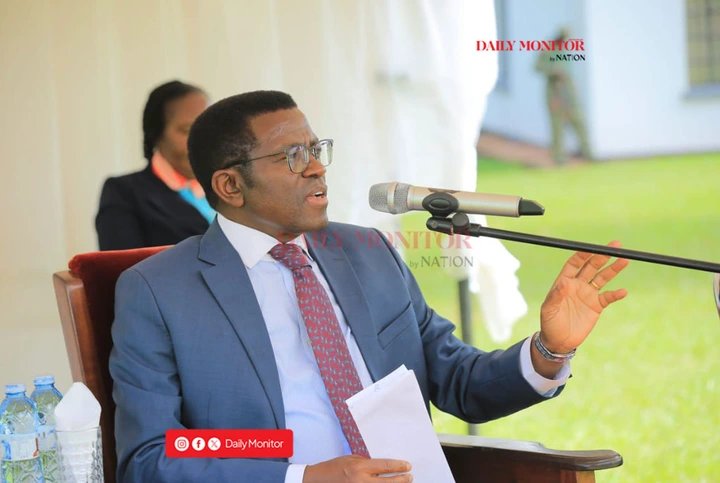

One of the key events on Uganda’s religious calendar is the Martyrs Day celebrated every June 3 to honour the lives and sacrifices of 45 men who, rather than follow edicts of then Buganda King Mwanga II, elected to die for their faith as new Christian converts.
Whereas the martyrs were subjects of Buganda Kingdom, allegedly killed on the orders of Mwanga II, the remembrance is exclusively superintended by the Catholic and Anglican churches. Katikkiro Charles Peter Mayiga in an interview tells Shabibah Nakirigya that the present-day martyrs were traitors, defends the quality of education offered in Uganda and bids for organised special development. Below is an abridged version.
What is Buganda Kingdom’s position about Uganda Martyrs Day and what lessons do we draw from the annual celebrations?
Kabaka Mwanga ordered the killing of the [present-day] martyrs because they breached the law; they committed treason. In the eyes of the king and his officials, as at that time, they committed treason … So, these people were in breach of the law, never mind that it was about religion. Because Kabaka Mwanga would never appreciate Jesus as king, prophet, and priest. That's how Christians describe Christ; priest, prophet, and king. And referring to Christ as a king would rile the king because he was the king who was above everybody else.
So, when the king wanted to be served by his officials and servants and they [instead] attended Christian instruction, then that was going to offend him. And he had to give them an ultimatum to choose between their newly-found God and him. And when they opted for the newly-found God, he punished them. And I think Kabaka Mwanga II shouldn't be vilified for that. That’s a gross misinterpretation of history, a gross misunderstanding of the circumstances that prevailed during the reign of Kabaka Mwanga. I don't like people who talk ill of Kabaka Mwanga because, for me, they are lazy thinkers. If you are not a lazy thinker, you would understand that Kabaka Mwanga did what he had to do.
And any king in the world would do the same thing. But now, here we are. Christianity has blossomed. The Popes come and visit, and other religious leaders. Even with regard to Islam, Islam was the first formal religion here in Uganda. The first Muslims came before the missionaries and visited the Kabaka's court during the reign of Kabaka Suna II. So, everybody who believes in God, whether as a Christian or Muslim, should hail the kings of Buganda because it is because of them.
What are the views of Buganda Kingdom about the annual Uganda Martyrs Day celebration?
The kingdom has embraced Christianity. And [the Uganda] martyrs are looked at as pillars of faith. [The] annual Martyrs Day should be a day of reflection with regard to our commitment to our roles as leaders and keepers of the public good.
Would Mengo be open to engage with, for example, the Catholic and Anglican leaderships to co-organise the Martyrs Day?
Mengo [the administrative seat of Buganda kingdom] doesn’t need to co-organise Martyrs Day with Catholics or Anglicans.
Mengo is filled with many people, some of whom are non-Christian. However, we urge that as Christians commemorate the day, they pay respects to Kabaka Muteesa I, who invited teachers and missionaries [from Britain], and Kabaka Mwanga II, whose courage in fighting for the sovereignty of his kingdom acted as the catalyst for the spread of Christianity in Uganda.
Is there tension between culture and faiths over Uganda Martyrs Day anniversary?
There is no tension between culture and faith since we fully understand that the actions of Kabaka Mwanga II were fully within his mandate. Any Christian who vilifies Kabaka Mwanga hasn’t fully analysed the circumstances leading to the martyrdoms.
Away from the martyrs, how do you respond to the criticism of your administration on social media?
People are free to say what they want to say. They don't have editors anymore because wherever people are seated, they will say whatever comes to their minds. They're looking for followers. The people who abuse their social media platforms are very few. The majority of the people are appreciative of what we try to do for the Kingdom, for the King, and for Buganda.
A key vehicle for development is education. Is the quality of education in our schools relevant for human capital development?
I don't think that the quality of our education is bad. People graduated from Makerere University with Bachelor of Arts degrees in the 1940s and 1950s, and they were employed [and] impacted very effectively. Why do people say that today they cannot be employed? It’s the jobs that largely do not exist. Young people are employable; it depends on where they are deployed. A university degree is some kind of basic education [and graduates can always learn other skills afterwards].
What is your assessment of the state of governance and human rights in Uganda?
We need to strengthen the Judiciary because when it is not effective, the observance of human rights is always wanting. We have to streamline the judiciary and improve accessibility. The ability of judicial officers to dispose of matters before them expeditiously is crucial. We need to streamline the duties and operations of the police force because the police detect, investigate, and gather evidence.
Your comments about the ongoing investigation of former Speaker Anita Among for alleged corruption, illicit enrichment and abuse of office?
The probe against anyone, like Ms Anita Annet Among, is lawful. Anybody can be investigated. If you are suspected of having committed a crime, then the police should be deployed to investigate and establish the truth. The investigations should follow the law, and any evidence that is gathered against her should be compiled and presented to the State Attorney … [to] determine whether evidence gathered is sufficient for prosecution or not.
You have been vocal about organised spatial development. Any change you are satisfied with in Buganda?
In the urban setting, we all [should] operate in gazetted areas. It is not up to every urban dweller to set up his or her business wherever they think it is convenient. Where we set up kiosks and stalls must be regulated by the urban authority, as is the case worldwide. That is what leads to the [orderly] development of urban centres and contributes to the well-being of the residents of any urban area. No one is at liberty to set up [any development] wherever they choose.


 Government will not gazette Kijanangoma as King of Tooro for now - Attorney General insists
Ultimate Uganda
Government will not gazette Kijanangoma as King of Tooro for now - Attorney General insists
Ultimate Uganda
 King Oyo’s Body to Arrive Thursday
Ultimate Uganda
King Oyo’s Body to Arrive Thursday
Ultimate Uganda
 Besigye, Lukwago expected to meet Gen. Salim Saleh today at Kapeeke
Ultimate Uganda
Besigye, Lukwago expected to meet Gen. Salim Saleh today at Kapeeke
Ultimate Uganda
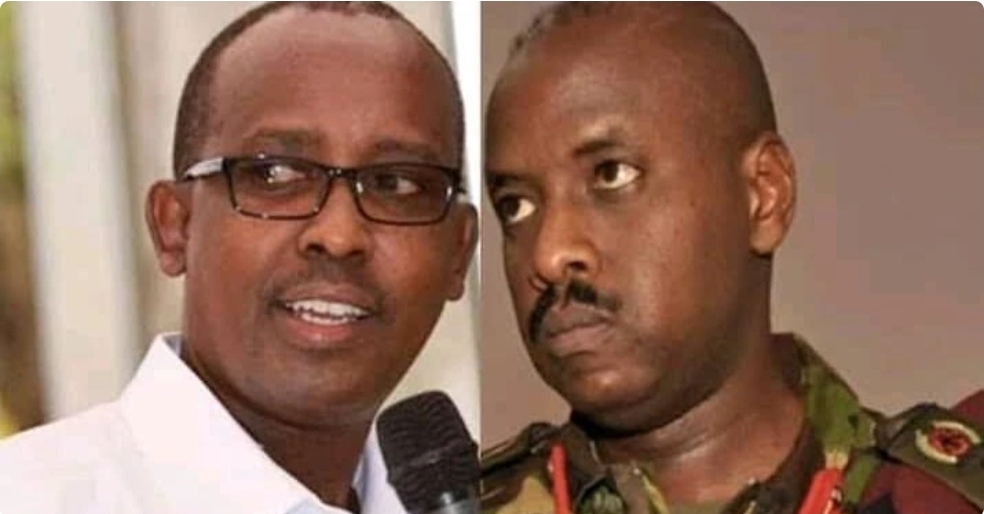 Rwabwogo Advised to ‘Eat His Bishop’ As MK Prepares to Enter State H’se: PREZ MUSEVENI ON HIS WAY OUT
Ultimate Uganda
Rwabwogo Advised to ‘Eat His Bishop’ As MK Prepares to Enter State H’se: PREZ MUSEVENI ON HIS WAY OUT
Ultimate Uganda
0 Comments