
NUP Boycott Is Political Theatre — Ofwono Opondo
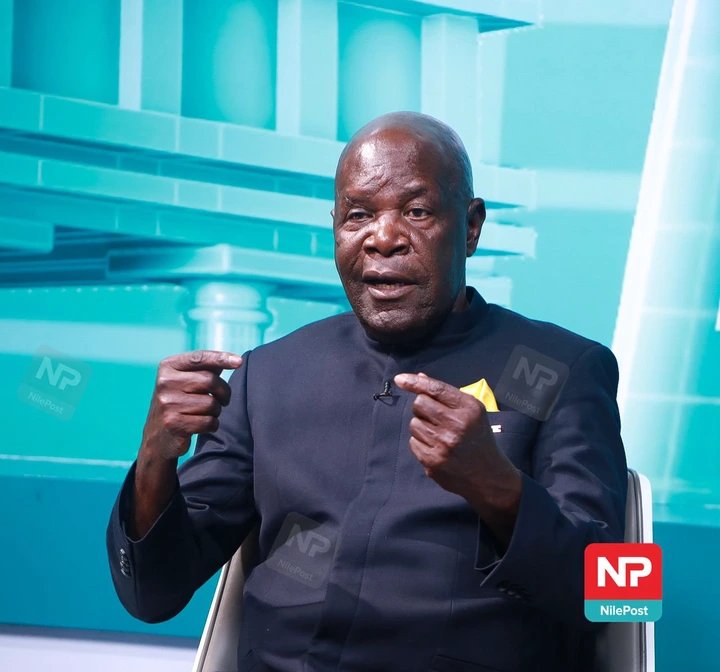

Older Persons Representative MP Ofwono Opondo has dismissed the National Unity Platform's stance on the State of the Nation Address as political theatre, arguing that elected leaders can challenge government policies more effectively from inside Parliament than through boycotts.
KAMPALA — Older Persons Representative MP Ofwono Opondo has criticised the National Unity Platform's approach to the State of the Nation Address (SONA), describing the party's position as political theatre and questioning the effectiveness of boycotting parliamentary proceedings.
Speaking on NBS TV's Frontline programme, Opondo dismissed suggestions that staying away from Parliament is necessary for opposition voices to be heard.
“NUP are in some form of theatre. Maybe they have no issues to raise,†Opondo said.
His comments come amid continuing debate over the Opposition's response to President Yoweri Museveni's State of the Nation Address, which saw many Opposition legislators stay away while others chose to attend.
According to Opondo, Parliament itself provides sufficient opportunities for lawmakers to challenge government positions, scrutinise policies and represent the interests of their constituents.
“You don't have to boycott Parliament in order for you to be heard or for you to raise issues,†he said.
The former government spokesman also questioned what he described as inconsistencies in the Opposition's approach, noting that some leaders who objected to attending the President's address had previously participated in parliamentary proceedings where Museveni was present.
“If the problem is Museveni being in the House, why didn't Hon. Mwiru stay away during the election of Speaker where he was a candidate?†Opondo asked.
His remarks appeared aimed at Opposition Chief Whip Paul Mwiru, who recently defended the low Opposition turnout at the State of the Nation Address, insisting that attendance had been left to the discretion of individual MPs.
The exchange highlights a long-running debate within Uganda's Opposition over whether engagement with state institutions strengthens or weakens their political message.
While some Opposition figures argue that participation in certain government functions legitimises a system they oppose, others maintain that elected representatives are most effective when they use parliamentary platforms to challenge the government directly.
Adding another voice to the discussion, Kira Municipality MP Ibrahim Ssemujju Nganda said the question of whether Opposition politicians should participate in government-led processes is not new.
Ssemujju noted that the debate tends to re-emerge after every election cycle as Opposition parties reassess their strategies and relationship with state institutions.
The disagreement was again evident during this year's State of the Nation Address, with some Opposition MPs attending the sitting while others stayed away.
The split has exposed differing views within Opposition ranks about how best to confront the ruling National Resistance Movement government and whether symbolic protests such as boycotts advance their political objectives.
For Opondo, however, the answer is straightforward: political leaders do not need to absent themselves from Parliament to make their voices heard.


 Government will not gazette Kijanangoma as King of Tooro for now - Attorney General insists
Ultimate Uganda
Government will not gazette Kijanangoma as King of Tooro for now - Attorney General insists
Ultimate Uganda
 King Oyo’s Body to Arrive Thursday
Ultimate Uganda
King Oyo’s Body to Arrive Thursday
Ultimate Uganda
 Besigye, Lukwago expected to meet Gen. Salim Saleh today at Kapeeke
Ultimate Uganda
Besigye, Lukwago expected to meet Gen. Salim Saleh today at Kapeeke
Ultimate Uganda
 Rwabwogo Advised to ‘Eat His Bishop’ As MK Prepares to Enter State H’se: PREZ MUSEVENI ON HIS WAY OUT
Ultimate Uganda
Rwabwogo Advised to ‘Eat His Bishop’ As MK Prepares to Enter State H’se: PREZ MUSEVENI ON HIS WAY OUT
Ultimate Uganda
0 Comments