
We Lost Gulu University, Let’s Not Lose Lira Airport’ — Bishops Tell Lango
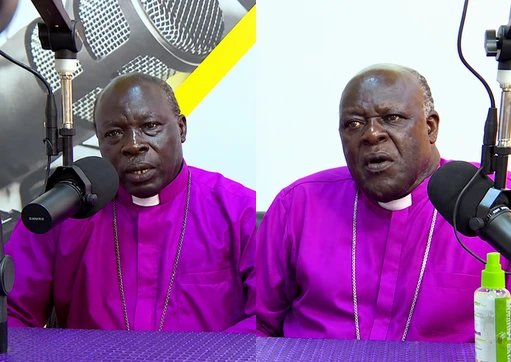

The call was made on Friday during the Odiko Alyet talk show on Unity FM, where Bishop Emeritus John Charles Odur Kami and Bishop Emeritus Alfred Acur Okodi weighed in on the controversy involving 68 residents of Anai, the Uganda Civil Aviation Authority (CAA), and the Lira City Land Board.
Bishop Odur drew parallels with the history of Gulu University, arguing that Lango had previously lost a major development opportunity because of resistance to a similar project.
“I want to say that our attitude as the people of Lango has caused us to lose many opportunities,†Bishop Odur said.
“For example, Gulu University was originally supposed to be established here in Lango, in Ngetta. It was taken to Gulu because people in Lango claimed that their land was being grabbed.â€
He noted that although Lango later received a university branch that eventually evolved into Lira University, the institution could have been much larger had the original project been embraced.
“Fortunately, we were later given a branch, and by God’s grace, that branch eventually became Lira University. However, had we not rejected the project at the beginning, Lira University would now be much bigger and more developed than it is today,†he said.
“Rejecting every initiative can make you lose what would have benefited you. I urge our people to refrain from such.â€
His remarks come amid an ongoing legal battle in which 68 residents of Anai have sued the CAA and the Lira City Land Board at the High Court in Lira, seeking to block what they describe as unlawful encroachment on their land for the proposed airport project.
Through their lawyers, Okwi & Company Advocates, the plaintiffs contend that the CAA fraudulently obtained a land title measuring approximately 520.2418 hectares, significantly larger than the land originally designated for the airport.
The residents further allege that the title extends beyond Lira City into parts of Kole District and overlaps private land holdings as well as sections of the Lira–Apac Highway road reserve.
Among the remedies sought, the plaintiffs want the court to cancel the disputed title, permanently restrain the defendants from interfering with their land, and award damages.
Speaking on the same programme, Bishop Alfred Acur Okodi acknowledged the residents’ constitutional right to seek legal redress but urged all parties to prioritise dialogue over prolonged litigation.
“First, I want to reach out to the 68 people who took the Civil Aviation Authority and the Lira City Land Board to court. We are not saying it was wrong for you to seek legal redress. We appreciate you for coming forward and expressing your grievances,†Bishop Okodi said.
“However, I believe dialogue remains the best way to resolve this matter. Sometimes, even when you believe you are right, the court may rule otherwise.â€
The bishop appealed to the petitioners to consider withdrawing the case and engage in discussions aimed at finding a mutually acceptable solution.
“I appeal to the petitioners to consider withdrawing the case so that all parties can sit together and find an amicable solution. Through dialogue, compromise and mutual understanding, we can reach an outcome that serves everyone,†he said.
He further called on the CAA, the Lira City Land Board and the affected residents to embrace compromise for the sake of regional development.
“We have made sacrifices before for the sake of development, and this matter should also be handled in a way that protects both the people’s rights and the progress of our region,†he added.
One of the plaintiffs’ witnesses, Anthony Ojuka, has maintained that residents are not opposed to the airport project but want their land rights protected.
“We are not against the construction of the Anai airport. We only want the land that rightfully belongs to the residents to remain untouched,†Ojuka said.
Meanwhile, Lira City Land Board Secretary and City Spokesperson Robert Okello said city authorities remain committed to finding an amicable solution, noting that the airport project is expected to spur trade, investment and economic growth across the Lango sub-region.
Efforts to obtain a comment from the Uganda Civil Aviation Authority were unsuccessful by press time.
The proposed Lira Airport remains one of the most anticipated infrastructure projects in Northern Uganda, with proponents arguing that it could unlock investment opportunities and improve regional connectivity. However, the dispute has highlighted the delicate balance between development ambitions and the protection of community land rights.


 The women who have been in King Oyo’s life
Ultimate Uganda
The women who have been in King Oyo’s life
Ultimate Uganda
 Ex Kagame Guard Commander Tom Byabagamba Dies in Rwandan Prison After 12 Years
Ultimate Uganda
Ex Kagame Guard Commander Tom Byabagamba Dies in Rwandan Prison After 12 Years
Ultimate Uganda
 Government begins salary payments for public sector workers – Reform Committee
Ultimate Uganda
Government begins salary payments for public sector workers – Reform Committee
Ultimate Uganda
 Temangalo land: NSSF, Nzenyi reach agreement
Ultimate Uganda
Temangalo land: NSSF, Nzenyi reach agreement
Ultimate Uganda
0 Comments