
Starlink Uganda Licence: What It Means for Businesses and Internet Users
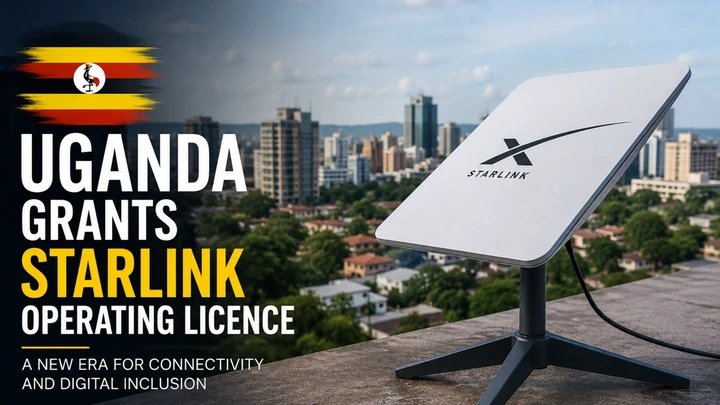

Uganda’s decision to grant Starlink an operating licence marks a new chapter in the country’s internet sector. The move introduces a different approach to connectivity and could change how businesses, institutions and communities access the internet, especially in areas that have traditionally struggled with reliable service.
Starlink, owned by SpaceX, provides internet through a network of low-earth-orbit satellites instead of relying only on traditional infrastructure such as fibre cables and mobile towers. This technology allows it to reach places where building conventional networks can be expensive or difficult.
The timing is significant because Uganda still faces a major internet access gap. While connectivity has improved in recent years, many rural communities remain underserved compared to urban areas. Available data shows that internet usage is much higher in towns and cities than in rural parts of the country, where infrastructure challenges continue to limit access.
For businesses, Starlink’s arrival could be especially important. Many companies operating outside major urban centres depend on stable internet for daily operations, including payments, communication, cloud services, digital marketing and customer management. A tourism lodge in a remote location, a farm using digital systems, a school offering online learning or an NGO working in rural districts could benefit from having another reliable connectivity option.
However, Starlink’s entry does not mean Uganda’s telecom market will immediately be transformed or that existing operators will lose their dominance overnight.
For years, Uganda’s mobile communications sector has been largely controlled by MTN Uganda and Airtel Uganda. Their strength comes not only from internet services but also from millions of mobile subscribers, mobile money platforms, agent networks, voice services and nationwide infrastructure.
Starlink enters a different part of the market. Its biggest impact is likely to be felt in broadband internet, particularly among businesses, institutions and customers who need reliable connections in locations where traditional networks are weaker.
The development could still increase pressure on telecom companies to improve their services. More competition often forces companies to invest more in network quality, pricing and customer experience. MTN and Airtel may respond by strengthening their own broadband offerings, expanding coverage and improving solutions for customers in underserved areas.
There is also a possible partnership angle. Satellite technology does not only compete with telecom operators; it can also support them. Companies like Airtel could potentially use satellite connectivity in certain situations to strengthen their own networks in hard-to-reach areas, depending on regulatory approvals and commercial agreements.
The biggest question around Starlink in Uganda will be affordability.
While satellite internet can solve the problem of reaching remote areas, the cost of equipment and monthly subscriptions will determine how widely it is adopted. If the service remains expensive, its early users are likely to be businesses, institutions and higher-income customers. If costs reduce over time, it could become accessible to a much larger part of the population.
Ultimately, Starlink’s licence is not a replacement for Uganda’s existing telecom sector. It is an additional player bringing a new technology and a different business model into the market.
The real impact will be measured by whether it helps more Ugandans, businesses and institutions get reliable internet access. For Uganda’s digital economy, better connectivity means more opportunities in education, commerce, healthcare, tourism and innovation.
Starlink may not end the dominance of MTN and Airtel, but it has the potential to change the competition and push the entire internet sector forward.


 Starlink goes live in Uganda; price comparisons against MTN, Airtel
Ultimate Uganda
Starlink goes live in Uganda; price comparisons against MTN, Airtel
Ultimate Uganda
 NSSF sets September 24 for Annual Members Meeting as savers await interest rate declaration
Ultimate Uganda
NSSF sets September 24 for Annual Members Meeting as savers await interest rate declaration
Ultimate Uganda
 Boda boda riders launch e-commerce, digital loans platform
Ultimate Uganda
Boda boda riders launch e-commerce, digital loans platform
Ultimate Uganda
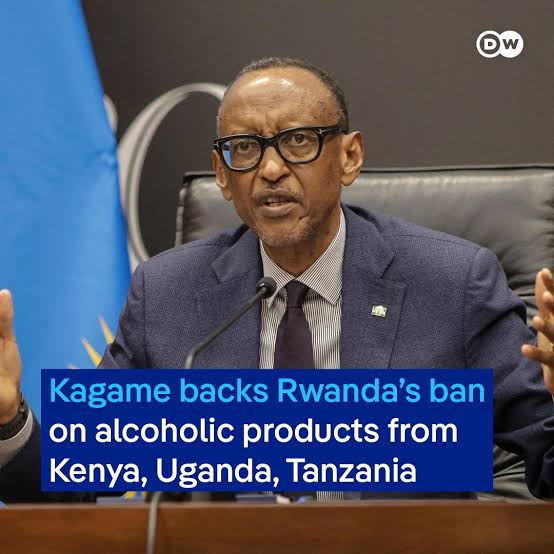 Rwanda: We Cannot Sit and Watch As Illicit Alcohol Kills People - Kagame
Ultimate Uganda
Rwanda: We Cannot Sit and Watch As Illicit Alcohol Kills People - Kagame
Ultimate Uganda
0 Comments